How to Use AI in Brand Design Without Looking Generic
A practical guide for businesses in Mexico: use AI in your design and content without losing your brand identity. Seven steps, prompts, and a final checklist.
This week one line made the rounds on X, and plenty of designers repeated it almost word for word: we're living through the worst era of design, because with artificial intelligence every brand posts the same thing and every image looks alike. The conversation kicked off on October 20 with the launch of Vyb, the first design model from Coco Labs, a team that, according to its own website, comes from the image models at Google DeepMind and Google Brain.
One thing is worth saying before we go on: many of those posts went out at almost the same time with very similar messages, which sounds more like a launch campaign than a spontaneous conversation. Vyb is in private beta, and its performance benchmarks were published by the company itself, with no independent verification. We're not here to recommend a tool.
What we do care about is the problem they point to, because it's real and we see it every day: you open Instagram, scroll past five different brands, and all five have the same golden light, the same blurred background and the same smiling person who doesn't exist. One of the launch posts put it perfectly: if you paid for a professional photo shoot, you don't want an AI handing it back to you redrawn.
The good news is that the problem isn't AI. It's how we use it. An image model doesn't know your brand; without rules, it guesses, and when it guesses, it lands on the average of everything it has ever seen. The fix is to give AI exactly what you'd give a new designer on their first day: your brand system, your real files and someone to review the work.
Step by step: AI with an identity of its own
1. Write down your brand system before you open any tool
If your identity only lives in the owner's head, or with the designer who made the logo years ago, AI has nothing to hold on to. Put it in writing, in a one- or two-page document:
- Your exact colors, with their HEX codes and what each one is for.
- Your typefaces: which one goes in headlines, which one in body copy and which one never.
- Your tone of voice in three adjectives, with one sentence you would say and one you wouldn't.
- What your brand doesn't do: styles, colors or devices that pull it away from who it is.
This document is the foundation for everything else. Without it, any tool, AI or not, will turn out pieces that look like everyone except you.
2. Build an asset kit and keep it close
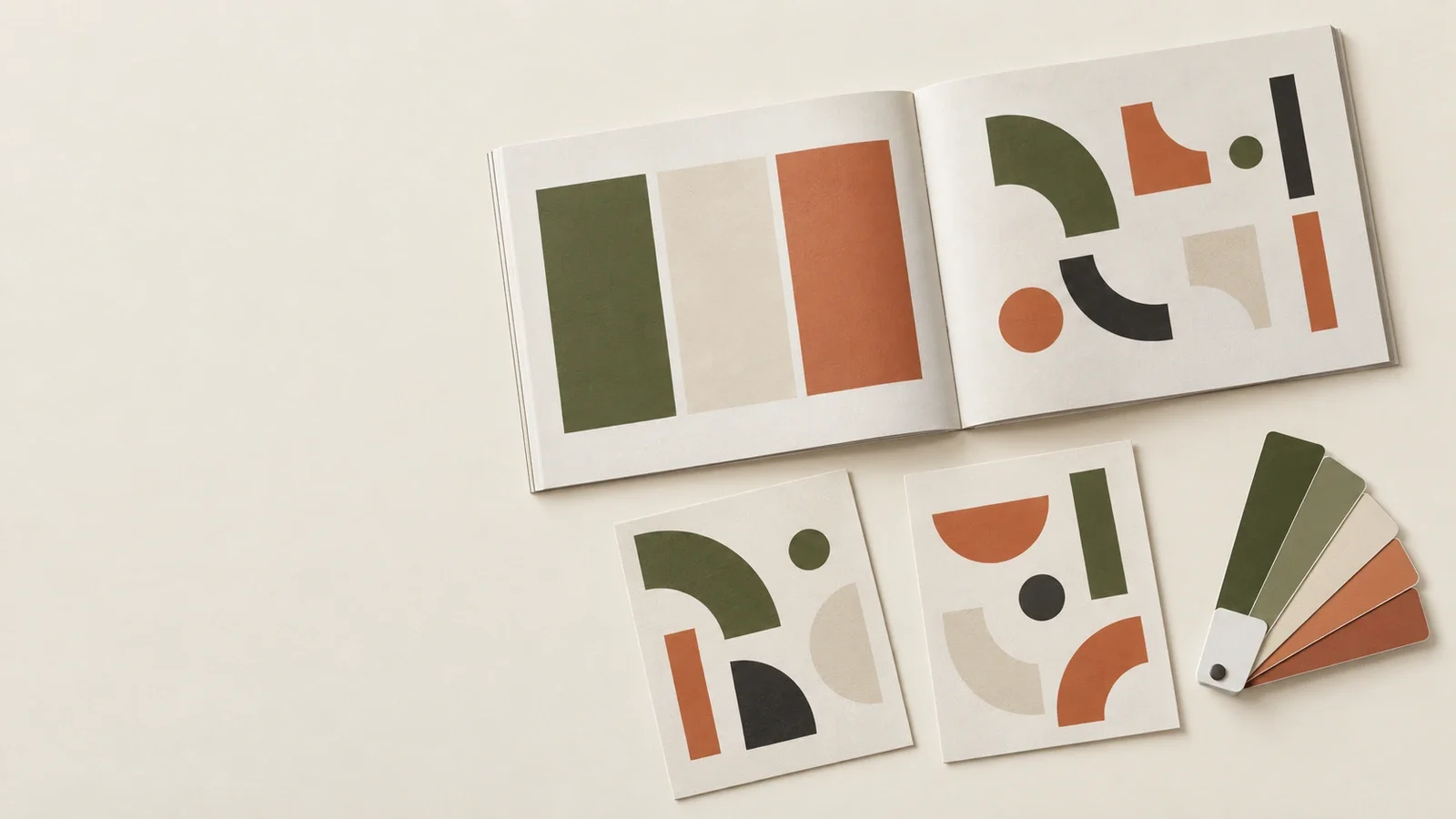
Gather in a single shared folder your vector logo (SVG or PDF) with its light and dark background versions, your font files, your icons, your textures and the ten or fifteen pieces you consider the best your brand has ever published. Those pieces are your style reference: whenever a tool accepts reference images, give it these, not whatever you find online.
3. Protect your real product photos
Your product is the one thing nobody else can have. If you sell a dish, a condo or a handbag, the photo has to show exactly that dish, that condo and that handbag. Use AI for everything around the product (backgrounds, formats, cutouts, size variations for each social network) and never to redraw the product itself. A customer who receives something different from what they saw in your post loses trust, and no design can fix that.
The same goes for people: on your website and in your ads, your real team and real customers beat generated faces every time.
4. Write prompts that include your brand rules
A generic prompt gets a generic result. Instead of asking for "a post to promote our seasonal menu," spell out your rules:
Create a background for a square Instagram post. Palette: olive green #5B6B3A, cream #F2EBDD and terracotta #C4643F, no gold and no neon. Style: natural photography in daylight, linen tablecloth texture, no people. Leave the top third empty for text, which will be added later in our typeface.
Notice three things: the colors come with their codes, the prompt says what you don't want, and the text isn't left to the AI, because you add it afterward in your real typefaces. Save the prompts that work in a shared document so your whole team starts from the same base.
5. Generate in parts, not the whole piece
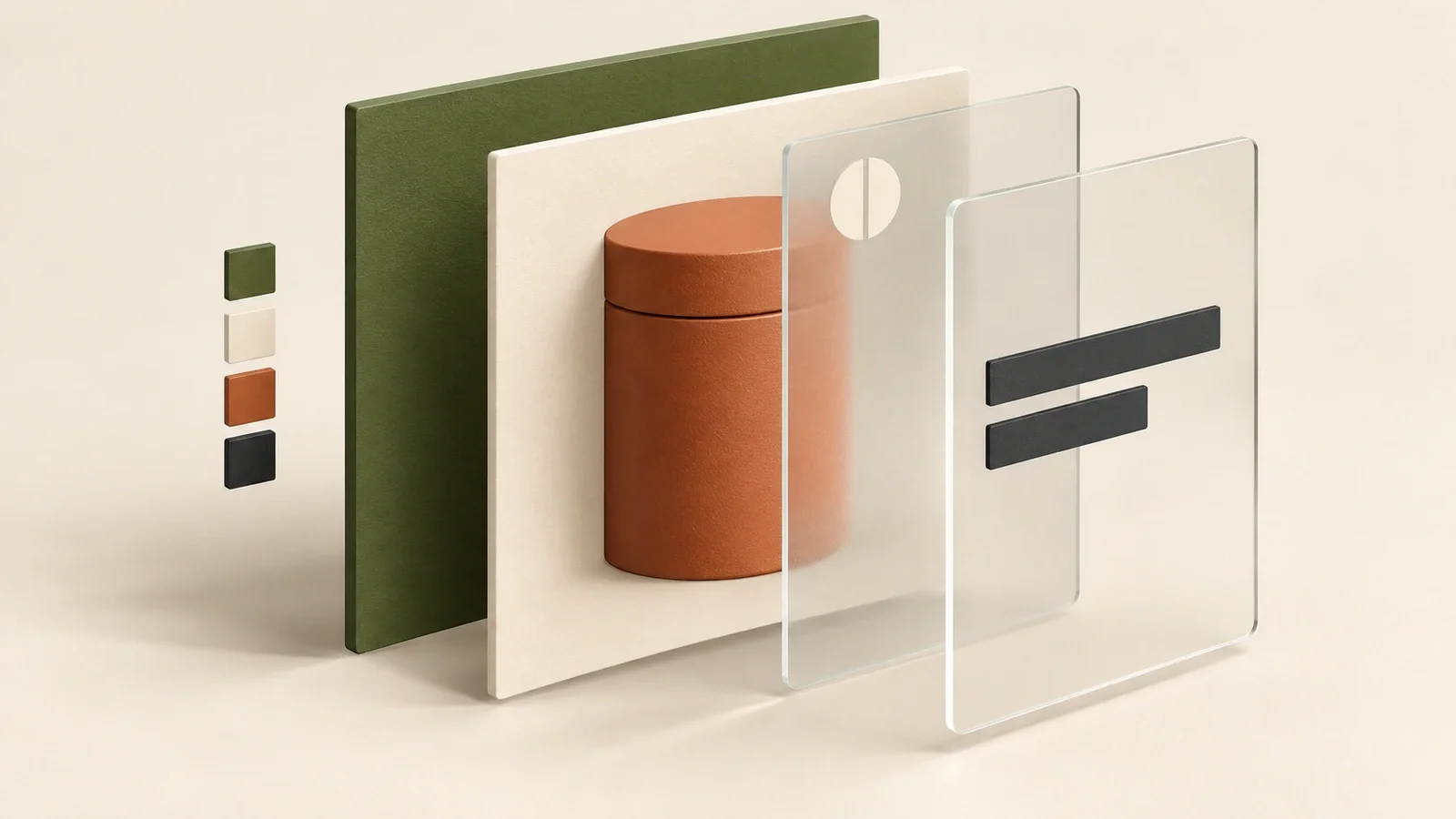
The pieces that hold on to their identity best are built in layers: a background on one side, the real product photo on another, the vector logo and the text in your typeface. That way you can change the headline without rebuilding the whole image, and the logo never comes out warped. That's exactly the approach Vyb promises, but you can apply it today with Canva, Figma or Adobe Express: AI handles one layer and you control the rest.
6. Have a person review every piece
AI is fast; judgment is still human. Decide who approves before anything goes live and give them a short list of what to check. It isn't about distrusting the tool. It's about having someone who knows the brand say "this isn't us" before your customer does.
7. Run a consistency checklist before you post
Before you upload any piece made with help from AI, check:
- Do the colors match the codes in your guide?
- Is the logo the original file, undistorted?
- Does the text use your typefaces, and is it spelled correctly?
- Is the product photo real, and does it show the product exactly as it is?
- Are there odd hands, letters or details that give away a generated image?
- If you cover the logo, would someone who follows you still know it's yours?
That last question matters most. If the answer is no, the piece may be beautiful, but it isn't building your brand.
AI as a tool, not an identity
The conversation around Vyb leaves a useful idea for any business: the tools will keep changing every month, but your brand identity is what makes you recognizable. The brands that stand out won't be the ones that stop using AI. They'll be the ones that use it with clear rules, with their own photos and with someone making sure every piece says who they are.
If you want to document your brand system, build your asset kit or bring AI into your design and content production without losing your essence, BDB Agency, a branding agency in Cancún, Mexico, works with you from strategy to execution. Get in touch at bdbagency.com.
Original posts and sources
- @socialwithaayan on X, October 20, 2026: https://x.com/socialwithaayan/status/2112584525666820121
- @techxutkarsh on X, October 20, 2026: https://x.com/techxutkarsh/status/2112584669313245272
- @atulkumarzz on X, October 20, 2026: https://x.com/atulkumarzz/status/2112588646369149087
- @celineodier on X, October 20, 2026: https://x.com/celineodier/status/2112679192236118502
- Coco Labs, official Vyb website (private beta, layered designs, team background): https://cocolabs.ai/
- OrcaRouter, "Vyb: Coco Labs' First Design Model Builds Marketing Graphics in Editable Layers," October 20, 2026 (launch date, authors of the announcement, benchmarks reported by the company itself): https://www.orcarouter.ai/blog/vyb-launch-layered-design-model