What Could the Next World Cup Trophy Look Like? Five AI-Created Concepts
Five concepts for the next World Cup trophy, imagined with AI and creative direction by a branding agency in Cancun: from the Jules Rimet to what could come next.
During the World Cup, everyone talked about ad campaigns, sponsorships, broadcast rights, ticket prices and the huge commercial machine that surrounds one of the biggest sporting events on the planet.
This time, we wanted to look at another one of its stars: an object that never steps onto the field, yet everyone recognizes it, and it stands for the highest achievement in international soccer.
The World Cup trophy.
With the 2026 tournament behind us, the conversation has turned again to future host countries, the next generation of national teams and how the tournament itself might evolve. Among all of it, one question stands out:
Will the design of the current trophy ever change?
No replacement has been announced, but the chance that the current trophy stays in use at least until 2038 got us imagining what might come after it. Using research, creative direction and artificial intelligence tools, our team at BDB developed five concepts that reinterpret one of the most recognizable symbols in sports.
From the Jules Rimet Trophy to today's design
The first World Cup trophy was unveiled in 1930. It was originally called Victory and was later renamed in honor of Jules Rimet, one of the driving forces behind the tournament.
The rules said the first national team to win three tournaments could keep it for good. Brazil reached that mark in 1970, so a new trophy was needed for the tournaments that followed.
FIFA received 53 proposals for its replacement. The winner came from Italian sculptor Silvio Gazzaniga, and his design debuted at the 1974 World Cup. The sculpture shows two human figures rising from the base and holding the world up in their arms.
The trophy stands 36.8 centimeters tall, weighs about 6.175 kilograms and is made of 18-karat gold. Its base features two bands of green malachite, one of its most distinctive details.
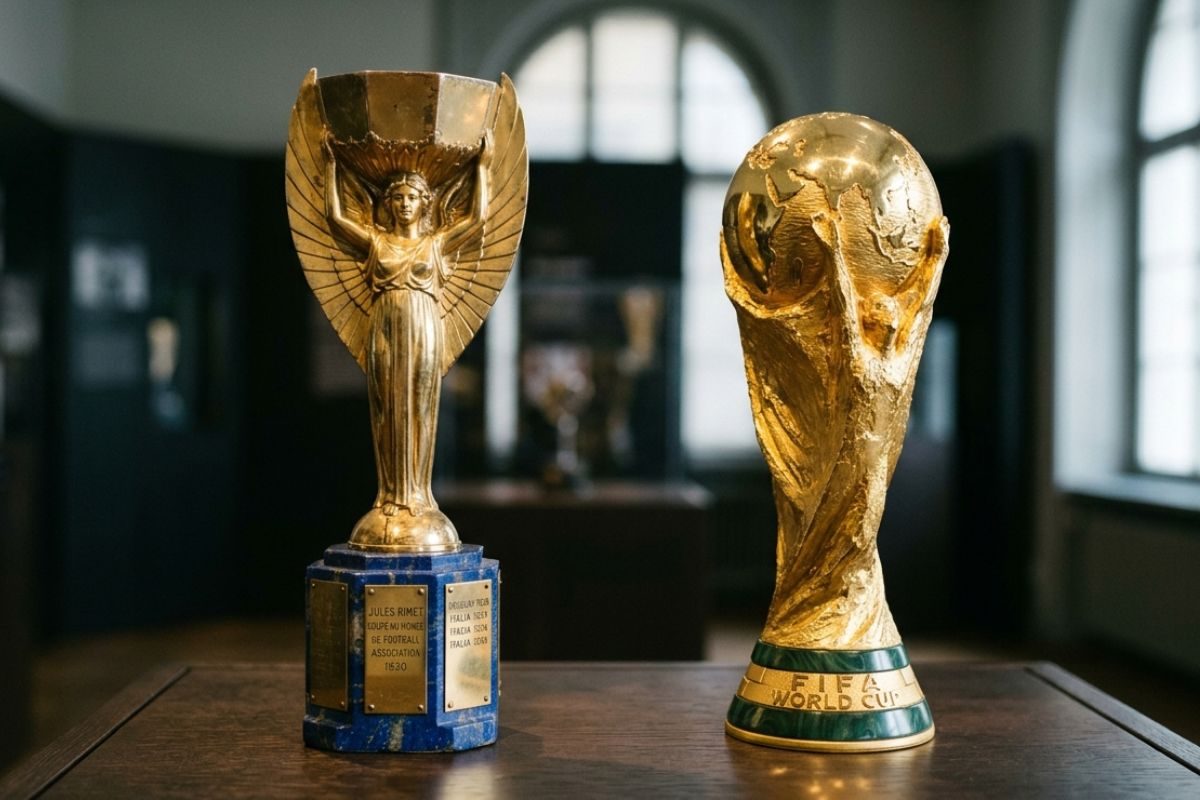
Unlike the Jules Rimet Trophy, no team can keep the original. The champions hold it during the celebration, then take home a gold-plated replica.
Why 2038?
The names of the winning nations are engraved on the underside of the trophy. Space is limited and the piece is now more than 50 years old, so people have been speculating for years that it may eventually need to be modified or replaced.
The website dedicated to Silvio Gazzaniga's work says the design will stay in use at least until the 2038 World Cup, thanks to how recognizable it is and the bond fans have built with it.
That doesn't mean a successor already exists, or that 2038 will necessarily be its last tournament. So far, no new model has been shown publicly, and no official competition to replace it has been announced.
For now, talking about the next trophy is still an act of imagination. And that is exactly where our proposal begins.
Five concepts for the trophy of the future
Since 1974, materials, manufacturing methods and the tools for developing and visualizing new ideas have all moved forward. So we asked ourselves:
How could the trophy change without losing the power and meaning it has built over more than five decades?
The result is a collection of five concepts. Each one takes a different direction, from reinterpretations that stay close to the traditional silhouette to orbital structures that completely rethink what a trophy can be.
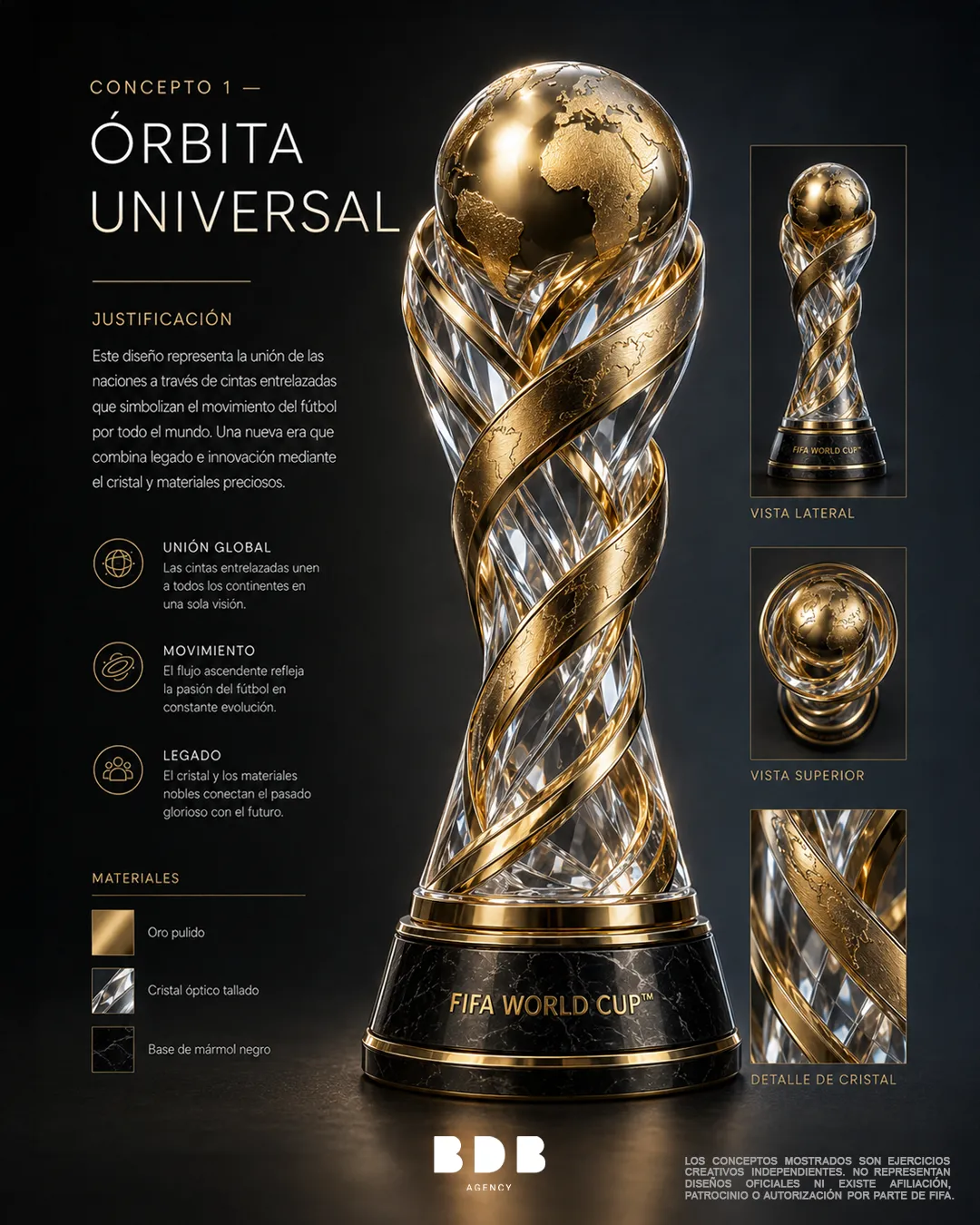
Concept 1: Universal Orbit
Universal Orbit represents the union of nations through golden ribbons woven around a crystal structure.
The lines rise until they hold up a globe, a symbol of soccer moving around the world. Gold, optical crystal and black marble tie the legacy of the great trophies to a lighter, more contemporary look.
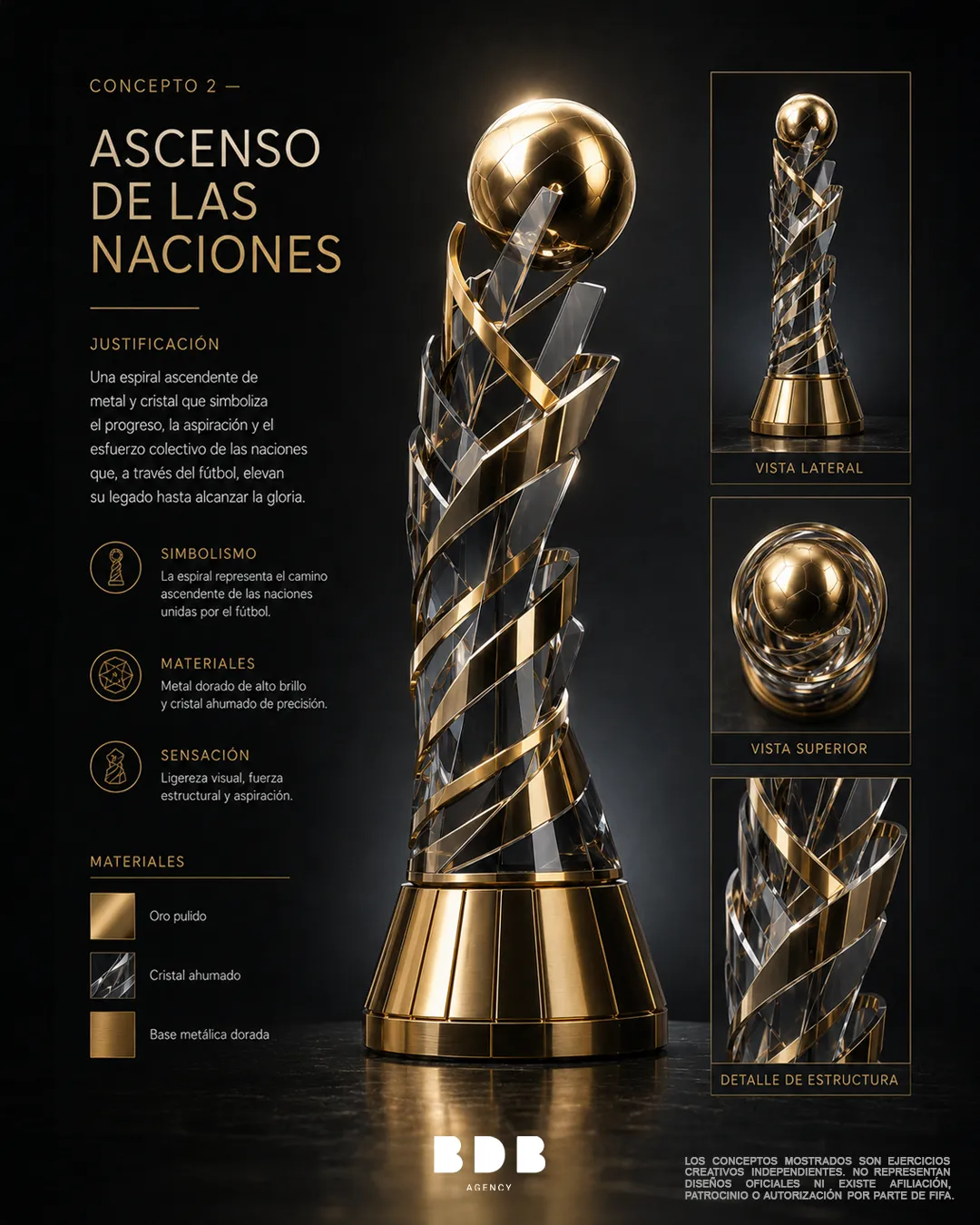
Concept 2: Rise of Nations
In Rise of Nations, shards of smoked crystal and gold metal climb from the base toward a sphere inspired by a soccer ball.
The structure stands for collective effort, competition and each team's climb to the top. It's the most architectural proposal of the five: vertical lines, visual tension and a constant sense of growth.
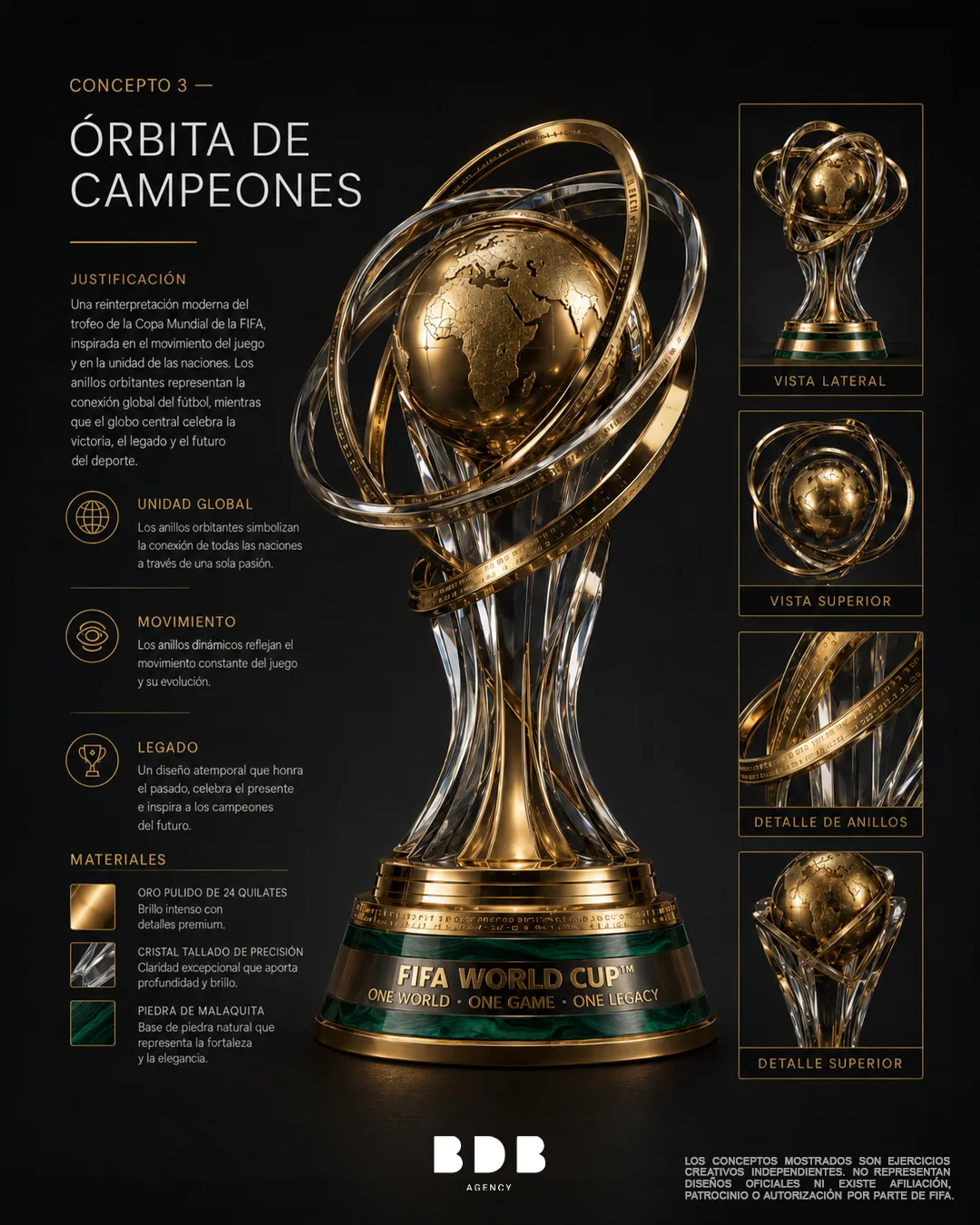
Concept 3: Orbit of Champions
Orbit of Champions keeps several recognizable elements of the current design: the world at center stage, a rising structure and green bands inspired by malachite.
Around it, a series of rings represents the connection between nations, the movement of the game and the tournament's long history. These rings could also carry the names of champions, years or host countries.
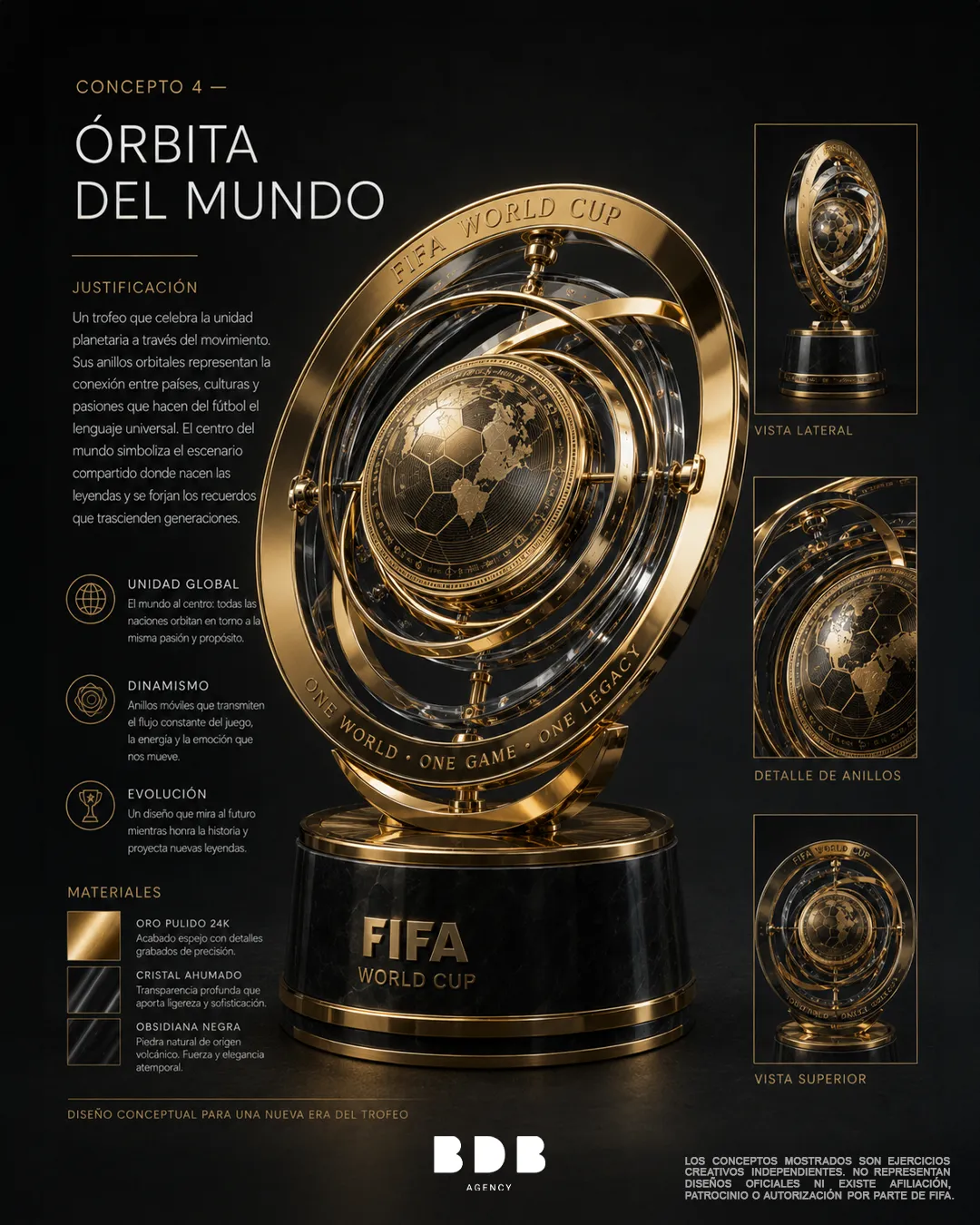
Concept 4: World Orbit
Inspired by gyroscopes and armillary spheres, World Orbit is the most dynamic concept in the collection.
Its centerpiece works as both planet and ball, surrounded by rings that could turn on different axes. The result is a trophy that changes its look depending on how its parts are positioned, with nations orbiting around a single shared passion.
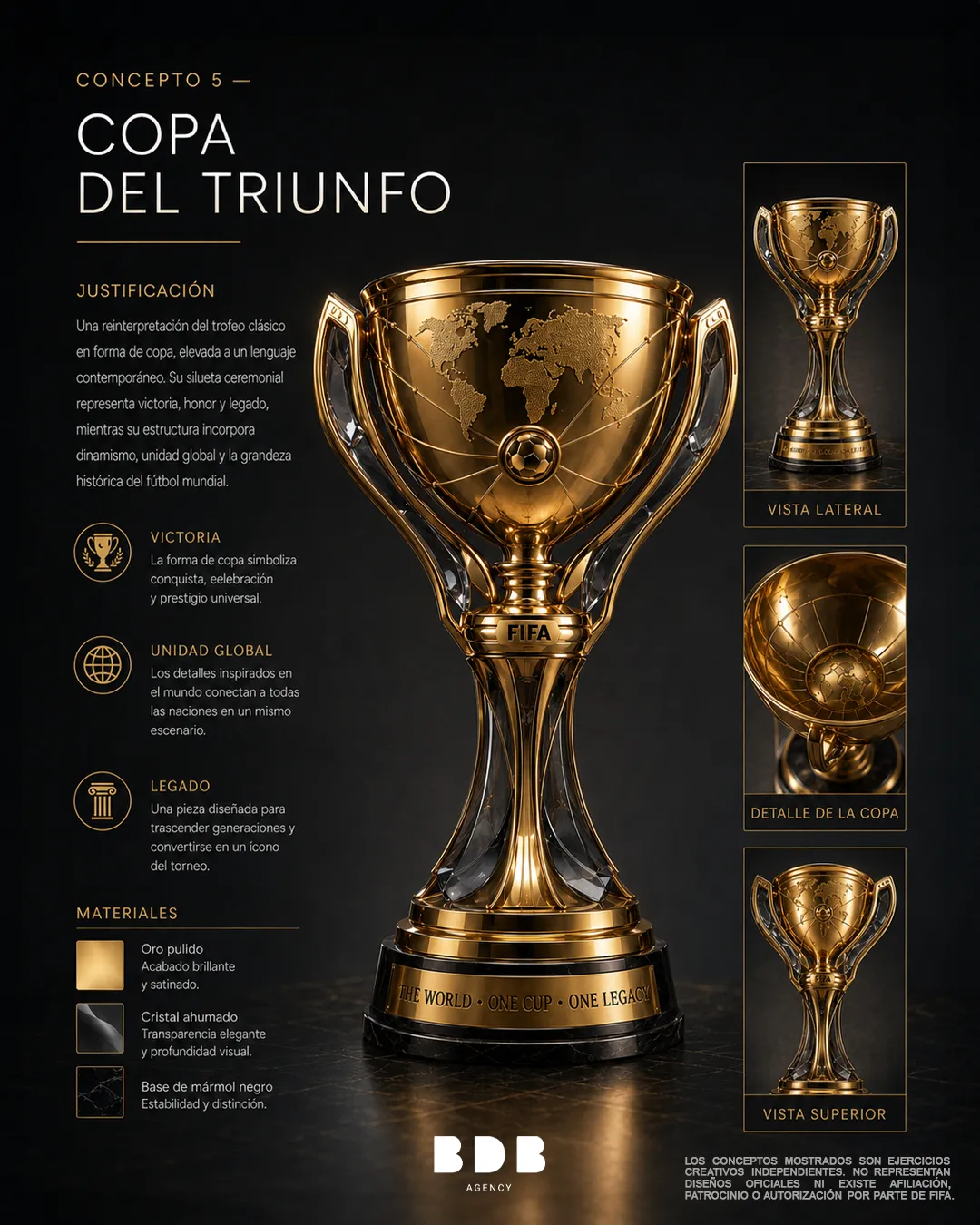
Concept 5: Triumph Cup
Triumph Cup goes back to the traditional shape of a cup, then speaks a more contemporary language.
It keeps a ceremonial silhouette, side handles and a wide central body. A world map and lines linking different territories reinforce its global character, while smoked crystal and gold metal update its structure. It's the option closest to the classic moment of lifting a cup.
Artificial intelligence with creative direction
Calling these pieces “created by artificial intelligence” only tells part of the story.
AI let us explore shapes, materials and compositions much faster. But first we had to decide what each concept should represent, which elements of the current trophy were worth keeping and how to make each proposal distinct.
The process included research, concept development, generating multiple versions, correcting proportions, choosing materials and designing the final presentation.
The tool can produce an image. Human direction is what gives it an idea, a purpose and a story.
These designs aren't ready for production either. Turning any of them into a real object would take technical drawings, structural analysis, weight testing, prototypes and detailed material studies.
What this exercise means for BDB
Imagining the future of a trophy and building a campaign for a brand start from the same place: understand the context, find the opportunity and turn an idea into work that matters.
At BDB, a branding and marketing agency in Cancun, Mexico, we bring together creativity, strategy, production, technology and artificial intelligence to help local and international brands communicate better, stand out and grow their sales.
We don't use AI as a substitute for strategy. We bring it in when it can open up creative possibilities, speed up the work, analyze information, automate tasks or build better tools for a campaign.
Because creating content keeps getting easier. What really matters is still knowing what to create, why to create it and how to connect it to a brand's goals.
Five concepts, one winner
We don't know what the next trophy will look like, or when the time will come to replace the current design.
Maybe it will keep the silhouette we know. Maybe it will bring in new materials, moving parts or a completely different structure. Until there's an official answer, we decided to imagine a few possibilities.
Universal Orbit, Rise of Nations, Orbit of Champions, World Orbit or Triumph Cup: which one would you choose?
See our case studies, explore our services and get in touch with our team to see how we combine creativity, strategy and artificial intelligence to move each brand forward.
Disclaimer: These concepts are independent creative exercises developed by BDB Agency with the help of artificial intelligence. They are not official designs and do not imply any affiliation with, sponsorship by or authorization from FIFA.